Justice pour Gaza
Preuves. Régulateurs. Justice — pour faire cesser le dommage et obtenir réparation.

Preuves. Régulateurs. Justice — pour faire cesser le dommage et obtenir réparation.
La continuité n’est pas un accident : elle est structurée, normalisée et récompensée.
De manière générale, pour continuer à tirer profit de la guerre, les acteurs facilitateurs commettent trois erreurs fatales : ils évitent d’évaluer les impacts de leurs activités sur les droits humains et l’environnement tout au long de leurs chaînes d’approvisionnement, omettent ces impacts dans leurs rapports, puis continuent à commercialiser leurs produits et services comme « verts ». Ces pratiques constituent des manquements juridiques graves — et c’est précisément l’angle que nous visons.
« Justice pour Gaza » vise à obtenir des résultats réels et exécutoires de la part d’acteurs situés hors de Gaza dont les contrats, services, financements, assurances, dispositifs logistiques, technologies et autres formes de soutien ont contribué, dans la durée, à maintenir le dommage.
À tout le moins, le projet cherche à perturber ce système. Concrètement, cela revient à exiger que chaque maillon fasse l’une des deux choses suivantes :
– prouver sa conformité à ses obligations légales et de responsabilité au moyen d’éléments clairs et vérifiables, ou
– suspendre les activités et opérations qui contribuent au dommage civil et environnemental, jusqu’à ce que la sécurité et la conformité soient démontrées et que les personnes affectées soient dûment indemnisées.
Le projet privilégie les actions qui changent les comportements dès maintenant, empêchent la répétition, et obtiennent une réparation et une restauration bénéficiant réellement aux civils.
Toute solution poursuivie dans le cadre de « Justice for Gaza » repose sur des principes clairs :
Les étapes juridiques et techniques nécessaires sont traitées de manière confidentielle via des mandats signés, puis mises en œuvre avec des avocats qualifiés, des experts indépendants et une supervision robuste.
Pour que EvidenceBank puisse coordonner ce projet de manière efficace, protéger les droits des personnes affectées et garantir le sérieux des démarches, une qualité pour agir fondée sur un mandat émanant des victimes et des personnes concernées est nécessaire. Un mandat clair permet de réunir et d’organiser les preuves de façon rigoureuse, d’échanger avec les avocats et les interlocuteurs concernés sur une base formelle, et de construire un parcours exécutoire visant à faire cesser le dommage, établir les responsabilités et obtenir une réparation réelle.
À cette fin, un Mandat-cadre est proposé à la signature des victimes et des personnes concernées, pour permettre à EvidenceBank de :
EvidenceBank n’est pas un cabinet d’avocats. Seuls les avocats peuvent donner des conseils juridiques, saisir les juridictions et représenter officiellement les personnes dans une procédure.
L’écosystème de facilitation du dommage se compose de dizaines de grandes entités — multinationales, institutions financières et infrastructures de marché. Des mises en demeure formelles ont déjà été adressées à plusieurs d’entre elles, avec notification de la possibilité d’actions juridiques le cas échéant. Nous constituons désormais un réseau d’avocats, auxquels seront remis des dossiers prêts pour l’action contentieuse, structurés et indexés, exposant clairement la chaîne de causalité et de responsabilité et identifiant le for le plus pertinent — afin d’accélérer la procédure et d’obtenir des résultats exécutoires.
Le projet est mené de manière pragmatique : chaque acteur est poursuivi dans le pays et devant la juridiction où la voie d’action est la plus efficace. Certains acteurs peuvent être mis en cause dans plusieurs ressorts ; la stratégie retient alors l’option la plus rapide, la plus sûre et la plus susceptible d’aboutir, au regard des faits et des preuves disponibles.
Au fil de l’avancement, l’avocat chef de file et l’équipe d’appui peuvent évoluer ou s’élargir selon les besoins et les capacités. EvidenceBank tient une liste officielle et datée des avocats engagés sur le projet et la met à jour lorsque nécessaire. Il n’est pas nécessaire de resigner le mandat à chaque changement : la signature initiale demeure valable tant que les protections fondamentales et les principes essentiels du projet restent inchangés.
Ce projet porte sur des préjudices graves, des éléments de preuve sensibles et des démarches juridiques complexes. Pour cette raison, la participation n’est pas automatique et aucun mandat n’est signé sans examen préalable.
Toute démarche commence par l’expression d’un intérêt via un formulaire sécurisé. EvidenceBank examine ensuite chaque demande au cas par cas, en tenant compte de la sécurité, de la pertinence et de la cohérence juridique.
Les avocats sont évalués afin d’écarter tout conflit d’intérêts, de vérifier leur capacité, et d’assurer leur adéquation avec le projet. Les personnes concernées sont également examinées pour garantir la clarté, le consentement et la protection.
Le dépôt du formulaire ne crée aucune obligation juridique et ne fait pas de son auteur un demandeur par défaut.
Après l’envoi du formulaire, EvidenceBank examine la situation afin d’identifier l’étape la plus appropriée.
Examen initial
Les informations sont évaluées au regard de la pertinence, de la sécurité et de la cohérence juridique.
Prise de contact (le cas échéant)
Un échange peut être proposé pour obtenir une précision ou un élément de contexte complémentaire.
Transmission des documents si nécessaire
Ce n’est qu’après examen qu’un mandat, des termes de référence (ToR) ou tout document juridique éventuel sont transmis pour signature.
Aucune pression, aucun engagement
La décision de poursuivre (ou non) appartient entièrement à la personne concernée après lecture des documents.
Important :
Ne pas transmettre de pièce d’identité ni d’élément de preuve sensible via les réseaux sociaux ou des canaux publics.
Projets Actifs

Un écosystème de pollution vieux de plus de 60 ans, alimenté par l’extraction, la transformation et le commerce de matières dangereuses — des atteintes environnementales et aux droits humains toujours en cours.
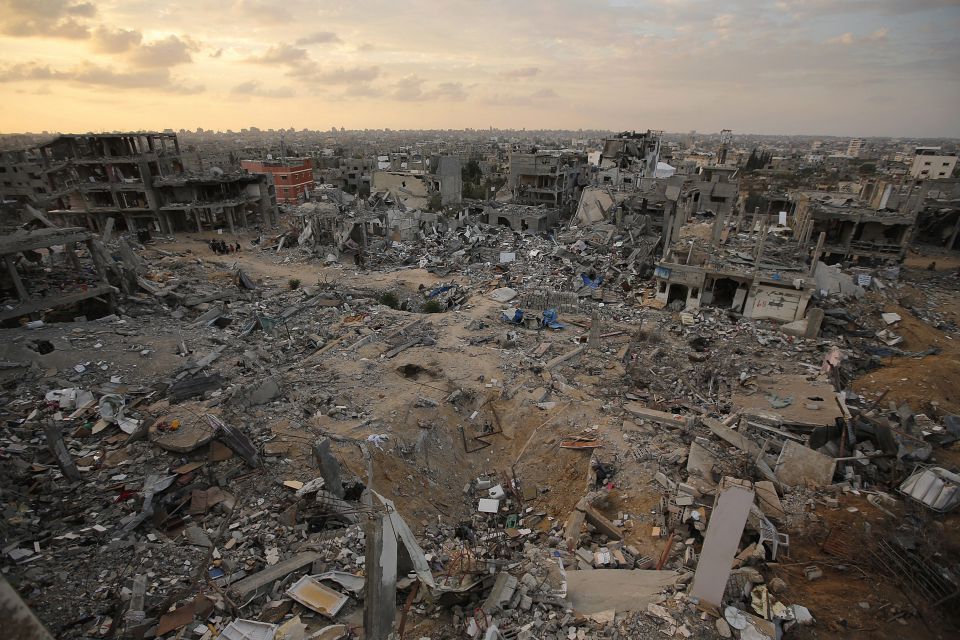
Depuis 2023, un écosystème de guerre qui entretient des dommages humains et environnementaux massifs — cartographie des réseaux facilitateurs et constitution de dossiers prêts à l’action sur les voies civiles de responsabilité.

Contrebande illicite d’or finançant la guerre et les déplacements — constitution de dossiers civils pour perturber le système et obtenir des résultats exécutoires.
We will contact you soon

Our excellent customer support team is ready to help.
Before a policy, investment, or corporate initiative advances to budget committees, boards, or parliaments, it must answer five core questions and one transversal test:
Core Principles:
Transversal Test:
If a proposal fails any core principle test, it is deemed incoherent and cannot proceed. If a proposal passes all five principles individually but violates Balance (e.g., "we're improving worker Wealth but destroying ecological Balance"), it is also rejected as incoherent. This is not a veto; it is a filter. Proposals that pass MAP—satisfying all five principles in balance—advance to the normal governance cycle with ethics already embedded, reducing downstream contradictions.
Where MAP is Used:
AIG recognizes that the Higher Objectives cannot be achieved by any one actor alone, and that Balance—the principle ensuring no one objective dominates—requires all stakeholders to be present in decision-making:
Without all five voices at the table, Balance is impossible. One principle will inevitably dominate.
AIG embeds this interdependence into governance structures:
Where AIG is Used:
CIF uses data integration and algorithmic analysis to detect these Balance violations early, before they accumulate into systemic failures.
Three Layers of Monitoring:
1. Principle-Specific Signals
2. Balance-Violation Detection
3. Early Warning System
Data Sources:
Human Oversight: CIF is not autonomous. Algorithms detect divergences and principle conflicts; humans interpret context and decide action. This preserves accountability while enabling scale and speed.
Where CIF is Used:
Four Components:
1. Scenario Testing for Balance
2. Citizen Review Panels for Balance
3. Balance Tipping Point Monitoring
Certain breaches of Balance trigger automatic policy review:
When crossed, governance pauses and reassesses, rather than continuing on autopilot
2. Iterative Refinement for Balance
Rather than 5-year policy cycles, AES embeds 6-month reflection cycles where evidence is reviewed:
Where AES is Used:
Life is the most fundamental principle. It encompasses:
Without life, all other goods are impossible. Future generations cannot be secured if people are starving today. Resources cannot be justly distributed if communities are dying of preventable disease. Knowledge cannot flourish if people are consumed by survival anxiety. Moral freedom cannot exist if people live in fear.
This principle appears across human civilizations. Indigenous traditions prioritize "seven generations" of human and ecological survival. Christian theology affirms the sanctity of life. Jewish law protects the vulnerable. Secular human rights frameworks place life and health at the foundation of dignity. Islamic jurisprudence recognizes that in cases of existential threat, survival takes priority—but this principle has a universal lesson: life is so fundamental that ordinary governance must never make survival exceptional. It is the baseline condition for everything else.
Life without Balance collapses into ecological crisis. A policy that improves public health while destroying ecosystems violates Balance because it undermines the future Life of coming generations. A corporation that increases worker safety (Life) while poisoning the local water supply (Balance violation) has failed the test.
Progeny extends beyond children to future generations and the conditions that make flourishing possible. It encompasses:
Progeny is the principle of time itself. It asks: What are we building that will last? What are we leaving behind? A society that maximizes present consumption at the cost of future instability has chosen convenience over justice. Progeny rejects this bargain.
This is why every enduring civilization has emphasized intergenerational responsibility. Indigenous cultures institutionalize the "seventh generation principle"—decisions must be evaluated by their impact on descendants seven generations forward. Religious traditions across the world teach stewardship and custodianship of resources for those to come. Modern climate science quantifies exactly what this principle demands: we must live within planetary boundaries so future humans have a habitable world.
Progeny without Balance leads to unsustainable extraction. A policy that educates children while poisoning their future environment violates Balance. A corporation that invests in worker development while depleting the ecological commons has failed the test. Progeny demands that we secure future generations without sacrificing their Life or Balance.
Intellect is the capacity for reason, understanding, and the pursuit of truth. It encompasses:
Intellect is what enables humans to understand reality and make free, informed choices. Without it, people cannot consent to governance; they can only be controlled. Without it, communities cannot solve problems or adapt to change. Without it, societies stagnate.
Every human civilization has recognized that the capacity to think, question, and learn is indispensable. Plato placed reason at the center of justice. Confucian philosophy makes education foundational to social order. Indigenous traditions pass knowledge across generations through teaching and dialogue. Modern democracies depend on educated citizens who can evaluate evidence and hold power accountable.
Intellect without Balance becomes destructive. A technology that advances knowledge while enabling surveillance and manipulation violates Balance. A corporation that invests in R&D while suppressing worker voice or manipulating consumer information has failed the test. Intellect must serve all five principles, not dominate them.
Conscience is the capacity to hold and act on moral convictions, including but not limited to religious belief. It encompasses:
Conscience is the seat of human dignity. It is what allows people to say "no" to unjust commands, to stand with the oppressed even when alone, to maintain moral integrity under pressure. Without Conscience, people are mere instruments of authority. Without Conscience, communities cannot have genuine moral conversation—they can only enforce conformity.
This principle appears in every enduring civilization and ethical tradition. Freedom of belief is a universal human right recognized across cultures. The capacity to witness injustice and speak truth is protected in legal traditions worldwide. Philosophers from different eras and places recognize that moral autonomy—the right to follow one's conscience—is foundational to human dignity.
Conscience without Balance becomes coercive. A society that honors religious conscience while suppressing critical dissent violates Balance. A corporation that respects worker beliefs while ignoring their economic needs has failed the test. Conscience must be universal—extended equally to those we agree with and those we don't. And critically, Conscience must protect the right to question and challenge, not just to believe privately.
Wealth is not mere accumulation but stewardship—resources held in trust and circulated justly. It encompasses:
Wealth is the material condition for human flourishing. Without resources, people cannot survive, educate children, pursue knowledge, or maintain dignity. But wealth pursued without justice corrodes everything else. Inequality breeds resentment and instability. Exploitation generates poverty and desperation. Resource extraction without regeneration destroys the future.
Every human society has recognized that resources must be circulated justly for communities to endure. Indigenous cultures developed sophisticated commons management systems that sustained communities across centuries. Religious traditions teach that wealth is not personal possession but stewardship. Modern economics recognizes that fair distribution, rule of law, and worker protection are essential to stable markets. Environmental science shows that resources are finite and must be regenerated.
Wealth without Balance becomes exploitation. A corporation that accumulates profit while destroying ecosystems (Balance violation) or underpaying workers (Wealth unjustly distributed) has failed the test. Wealth must be circulated fairly, used sustainably, and never at the cost of Life, Progeny, Conscience, or Intellect.
Balance is not a sixth principle to be "protected" like the others. Rather, it is a cross-cutting, transversal principle that orchestrates the five core principles, ensuring they remain in harmony and never contradict each other. (The term al-mīzān from Islamic jurisprudence names this principle, reflecting its deep grounding in Islamic legal thought, but the principle itself is recognized across philosophical and natural systems worldwide.)
Where the five core principles define what must be protected, Balance defines how they must be held together.
Across Life and Progeny: Balance ensures that securing immediate survival doesn't undermine future generations' capacity to survive. A famine relief program that protects Life now must not deplete resources that Progeny requires.
Across Life and Wealth: Balance ensures that creating prosperity doesn't exploit vulnerable people and strip them of the conditions for survival. Growth that improves Wealth while destroying workers' Life violates Balance.
Across Intellect and Conscience: Balance ensures that advancing knowledge doesn't suppress freedom of belief, and that protecting belief doesn't suppress critical inquiry. Scientific freedom and religious freedom must coexist, not dominate each other.
Across Wealth and Progeny: Balance ensures that accumulating resources now doesn't load unsustainable debt onto future generations, and that investment in the future doesn't create poverty today.
Across all five simultaneously: Balance asks the fundamental question: Are we advancing all five principles together, or is one being sacrificed for others?
Balance reveals itself most clearly in complexity—when multiple goods are in tension:
In each case, Balance is not compromise—splitting the difference between justice and injustice. Rather, Balance is coherence: designing governance so all five principles advance together.
Balance is not a human invention—it is a pattern woven into creation itself. Physics, ecology, chemistry, social systems—all operate according to equilibrium principles. Gravity balances objects. Ecosystems balance predator and prey. Water cycles move through atmosphere and ocean in proportion. Social systems that ignore balance collapse into conflict or dysfunction.
This pattern is recognized across civilizations: Chinese philosophy centers on yin-yang balance; Indigenous wisdom teaches harmony with natural cycles; Stoic philosophy emphasizes living in accordance with natural order; modern systems theory studies how balance maintains resilience. The principle is universal: transgress the balance and systems break.
Balance operates at every level:
Current Prototypes:
🔹 GLOBALIGN - Trade Readiness & Sustainable Export Intelligence
Status: Demonstrated
In Active Testing
Focus: 4R Framework™ for ESG-compliant export strategy Ready for: SME pilots, national trade promotion agencies
🔹 GREEN DELIGENCE - Sustainable Finance & Portfolio ESG Integration
Status: Demonstrated
In Active Testing
Focus: ESG automation across investment cycle (pre-investment → reporting)
Ready for: Impact funds, DFIs, institutional investors ---
HOW THEY WORK TOGETHER
Research Integration: Exporters use Globalign (4R Framework™) → Achieve PERI™ readiness certification → Access Green Deligence-integrated financing → Sustainable value chain enabled
Measures alignment across governance levels — national, regional, and local.
Detects when local plans contradict higher-level strategies (e.g., zoning vs. climate targets).
Helps ensure top-down policies cascade coherently into territorial implementation.
Goes beyond compliance to evaluate cross-scale reinforcement.
Identifies where different levels of government pursue mutually supportive objectives — creating synergies instead of duplication.
Quantifies how strategies converge toward shared sustainability outcomes.
Examines intersectoral consistency across themes such as housing, mobility, health, and environment.
Highlights conflicts between departmental or policy silos that share territory but not vocabulary.
Enables integrated planning and avoids contradictory investments.
Assesses the semantic and ethical quality of policy language.
Checks whether commitments are explicit, measurable, and aligned with SDG/ESG principles.
Bridges the gap between policy intention and implementation clarity.
Aligns short-, medium-, and long-term planning horizons.
Detects time gaps where a long-term climate goal conflicts with short-term infrastructure choices.
Ensures continuity across electoral and strategic cycles.
Evaluates how policy functions — not just what it says.
Measures operational interdependence among programmes, budgets, and delivery mechanisms.
Provides a systems view linking resources, responsibilities, and results.
Ethigrality Alignment (85%) — SDG Wise’s own Ethigrality score across six principles, confirming governance-by-design (fairness, transparency, accountability, intergenerational balance).
Interoperability (0.86) — High compatibility with SDMX, GRI/CSRD mappings, OECD PCSD, and the MetaPolicy stack (PMC, CohAI/MGC, SIREPT, WiseParc).
TRL 6 — Advanced prototype validated with representative datasets; ready for targeted pilots.
GreenDeligence™ operates as a coherent ESG intelligence cycle, turning fragmented sustainability data and policies into a unified, verifiable governance process.
It embeds ESG reasoning at every step — from defining institutional purpose to measuring portfolio impact.
The workflow begins by analyzing the institution’s mission, regulatory environment, and stakeholder commitments.
Using the Coherence Engine, GreenDeligence™ generates or refines sustainability policies that are fully aligned with EU Taxonomy, CSRD, SFDR, and Ethigrality™ principles.
These policies are encoded into digital logic, forming the institution’s ESG governance DNA.
Output: A traceable, context-specific sustainability policy framework.
GreenDeligence™ translates policy logic into operational tools and procedures.
It audits products, services, and internal activities against ESG standards and regulatory benchmarks, ensuring every process aligns with the institution’s sustainability commitments.
Detected gaps trigger corrective actions and internal improvement plans managed through a dedicated interface.
Output: Continuous ESG conformity across departments and business lines.
At the investment cycle stage, every project or deal passes through an Ethigrality™-based evaluation.
The system quantifies ethical and sustainability performance across the six preservation dimensions — life, wealth, progeny, intellect, conscience, and balance — ensuring that financial decisions create genuine societal and environmental value.
Output: Investment approval grounded in ethical and sustainable coherence.
All ESG and investment data flow into a portfolio-level intelligence layer, consolidating indicators from projects, clients, and departments.
The system generates real-time ESG dashboards, CSRD-compliant reports, and impact statements linked back to their originating policies and financial flows.
Output: Transparent, verifiable, and continuous sustainability reporting.
The cycle closes with a feedback mechanism that re-injects performance insights into the policy layer.
This ensures the institution evolves with regulatory changes, market dynamics, and stakeholder expectations — maintaining ongoing coherence, accountability, and ethical integrity.
Output: A living ESG governance system that learns, adapts, and improves over time.
GreenDeligence™ is designed as an interoperable intelligence layer, not a standalone system.
It integrates seamlessly with existing ESG, risk, compliance, and reporting environments through API connectors and data-mapping interfaces.
Integration Logic
Deployment Options
Outcome:
GreenDeligence™ strengthens what institutions already use — adding a layer of coherence, ethics, and traceability that turns existing ESG infrastructure into a living, auditable governance system.
SDG 2.0 upgrades traditional SDG monitoring into real-time governance intelligence.
It helps governments and agencies:
Powered by: SDG Wise™, T-SOS™, MGC™
ESG 2.0 redefines sustainability governance by embedding ethics, coherence, and traceability into every financial and operational decision.
It moves beyond conventional ESG scoring toward a unified system where every policy, dataset, and investment can explain its purpose, alignment, and impact.
Powered by the Coherence Engine and grounded in Ethigrality’s principles, ESG 2.0 ensures that:
ESG 2.0 transforms compliance into coherence, making sustainability auditable, explainable, and ethically governed across the entire economy.
EnergISO™ integrates ISO 50001 with ESG 2.0, GHG Protocol, and CSRD requirements. It transforms energy audits into real-time improvement plans, providing dynamic dashboards, predictive savings models, and ethical alignment checks through the Ethigrality™ logic core.
 Your payment was processed successfully. Congratulations!
 You have cancelled the payment process.
 This popup does not exist. I'm sorry.